Your Method
The tools were never the problem. What's missing is a method no one could mistake for anyone but you. Your Method is the journey where you build exactly that: not borrowed from a…
Online·Mar 14, 2027
Build your method from your roots.
You've gathered years of skill, training, and experience. What you don't yet have is a method: one coherent way of working that carries your name, rooted in who you are, that others can feel and you can repeat. Your Method is the 138-hour journey where you build exactly that, not borrowed from a template, but excavated from your own roots.

First, choose where you want your own method:
You already run rooms full of people. Turn what you do into a signature program that carries your name: one your groups feel, that scales beyond you, and that other facilitators can deliver.
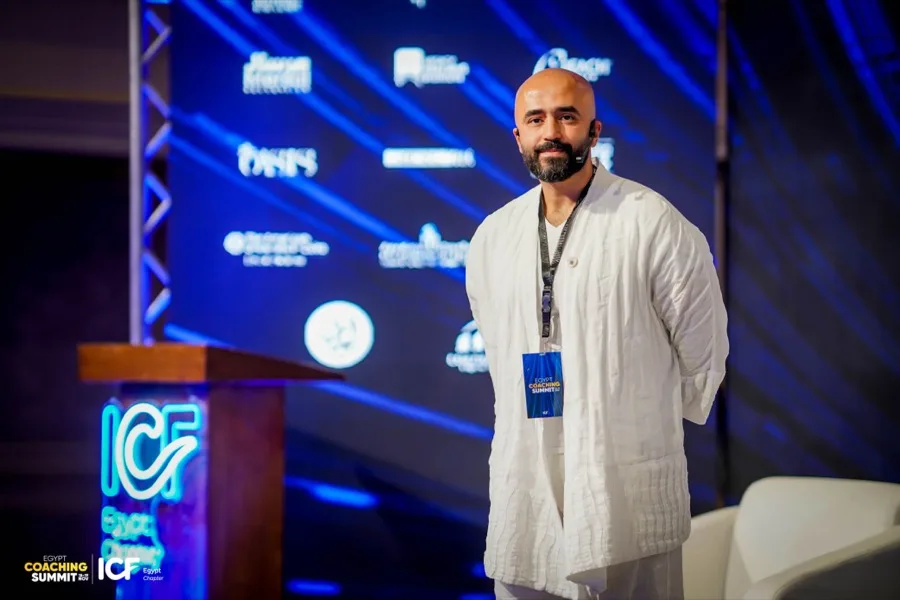
A Somatic Thinking journey · guided by Samer Hassan, ICF MCC · 138 hours · the deep build that Impact Engineering opens onto.
The ache
You can hold a room.
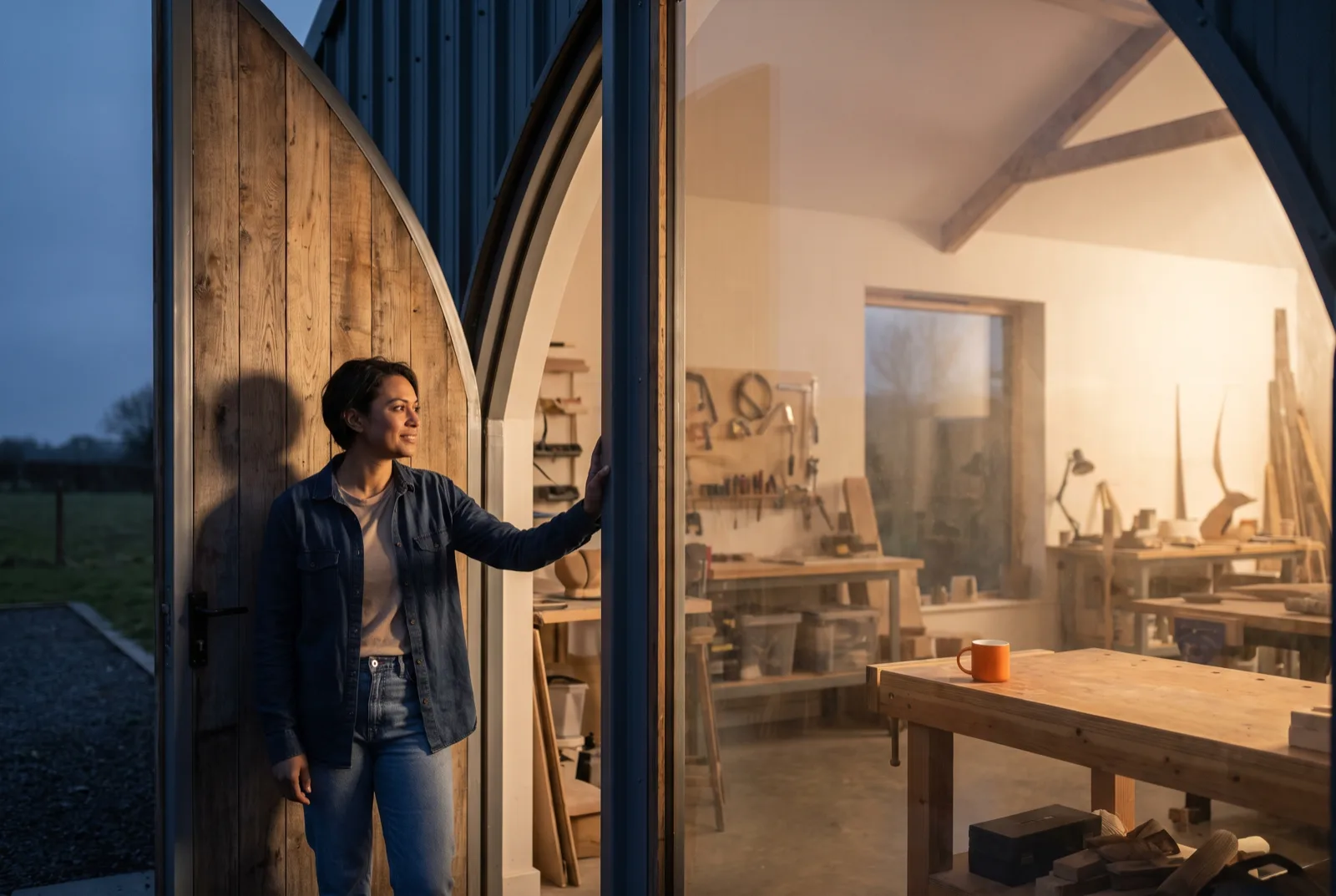
The workshop lands, the group leaves changed, and people ask who they should send you next. And still, what you deliver lives in your head, not in a method. You rebuild every cohort from memory; every great session is hard to repeat and impossible to hand to anyone else. You're known for being good in the room, not yet for a body of work that carries your name and outlasts the room you're standing in.
/images/programs/menhajak/door-coaching-en.webpYou deliver, but it costs you more than anyone sees.
Under pressure the decisions drift, the presence thins, and what holds together holds only because you're standing in the room. It was never a shortage of skill. You've just never built the way of deciding that leads you when it gets complicated, so you answer the loudest signal in the room instead of leading from your own ground.
/images/programs/menhajak/door-leadership-en.webpYou wrote the vision. You framed the values. And the daily decisions don't sound like either one.
The culture turns over every time the people do; what you built holds only while certain faces are still around. The intentions were never the problem. You just never turned who you are into how the whole place decides when you're not in the meeting.
/images/programs/menhajak/door-entrepreneurship-en.webpWhat it is
Most programs add content on top of what you carry. Your Method does the opposite: it rearranges your relationship with what you already have, and turns your accumulated experience into a clear, documentable method you can stand behind, repeat with confidence, and be known for.
The conviction underneath it:
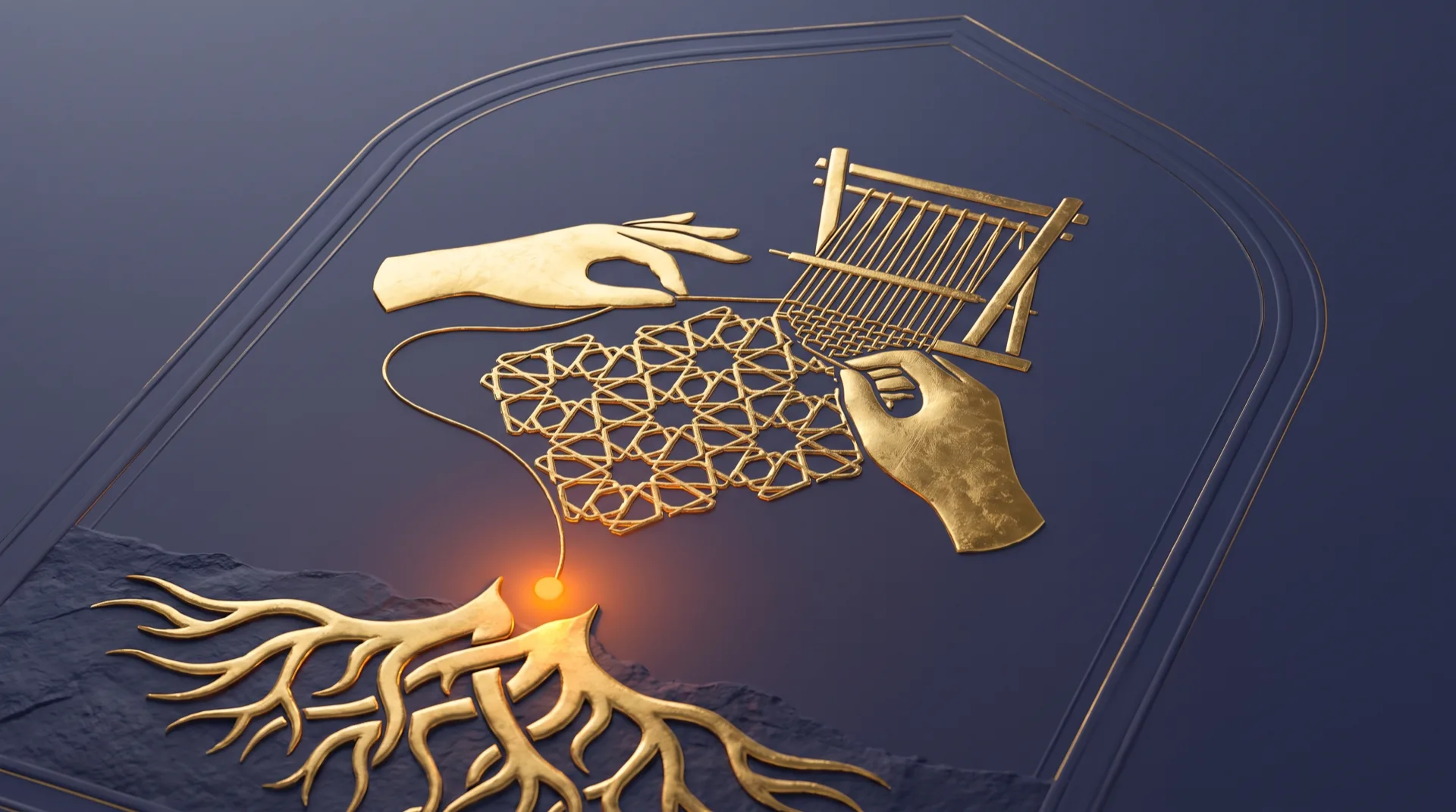
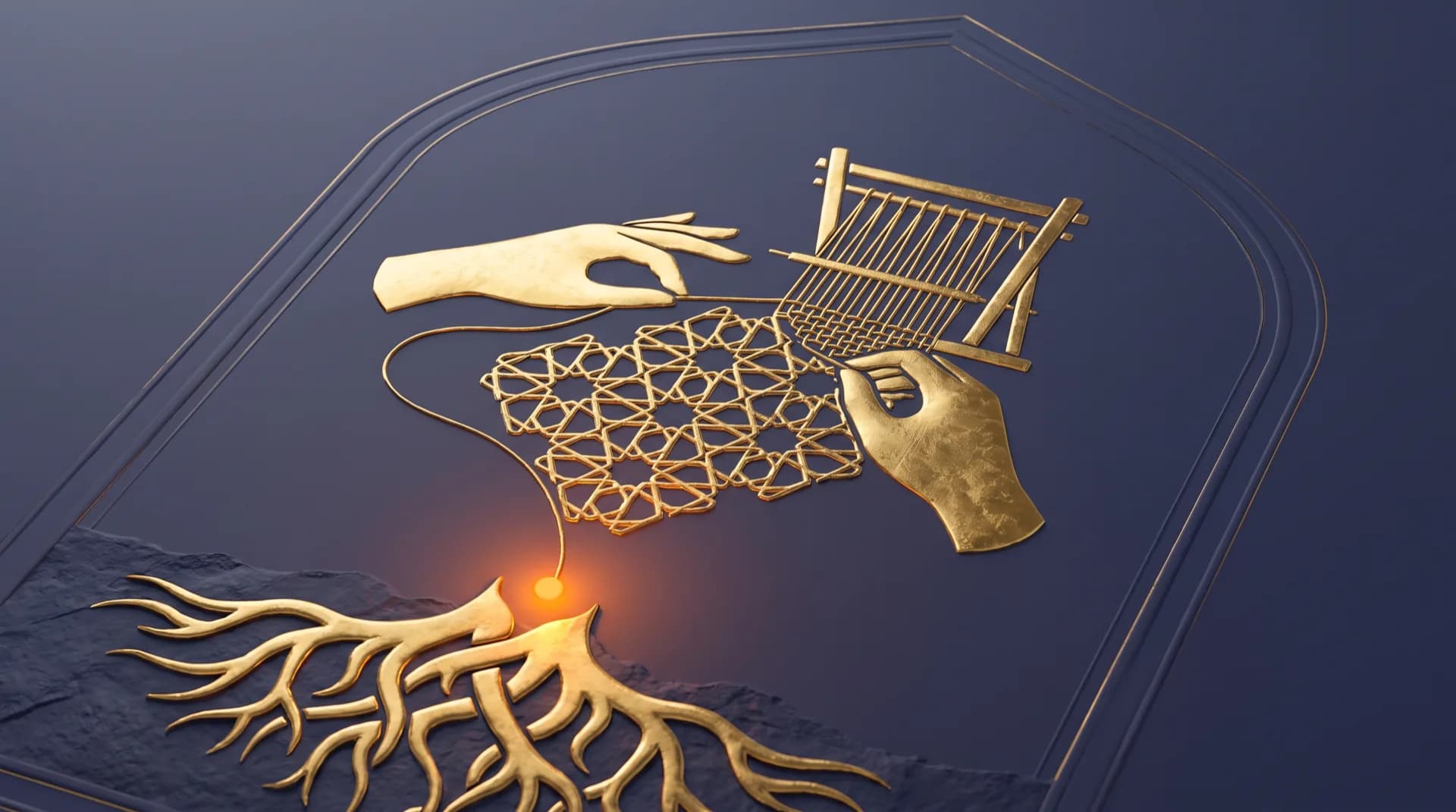
«ابنِ منهجك من جذورك»: build your method from your roots.
You don't borrow a method from a template that never quite fit our world; you excavate your own from your identity, your values, your message, your lived experience, and give it a structure. Because as an expert, you don't need more tools. You need an approach that expresses your authenticity.
A signature program you can run with any group, and teach other facilitators to run.
A decision-logic that holds your judgment steady when the room is loudest.
An operating method that turns your identity into how the company decides and behaves, with or without you.
/uploads/media/2026/07/a087b827-13eb-4628-ba97-33e8ca404bb6.webpThe journey
The journey doesn't begin with your method. It begins with you. The first and longest phase builds on two tracks that never separate: the human, and the craft. Your own ground is laid first: a deeper knowing of yourself, the balance of mind, body, and heart, and a presence that doesn't shake. And on that ground you learn the craft itself (professional coaching, the Somatic Thinking way). You learn how to accompany one person deeply, listening beneath the words, asking what opens rather than instructs, holding a conversation that moves someone. You practise with real people early, and you receive this work yourself before you ever give it: you live it from the inside first, the way every honest craft is learned.
Knowing how is not the same as having it in your hands. Here what you've learned gets activated: you coach real people across real sessions, record and review your own work, and sit with mentors who watch you practise and refine you one conversation at a time. You come out the other side not having studied the craft: having done it, under eyes that make you better.
Now, and only now, the forge. It opens where every honest method opens: your identity. Who are you when you work? What are your values, your message, the story only you can tell? From that root you learn to carry what you do beyond one person: designing and leading group work whose depth doesn't thin as the circle widens. And then you begin to forge the method itself: from your roots upward, excavating your experience and what you inherited, testing every principle until it holds, giving it a structure, a name, a first session. A method aligned with who you are and where you came from, and validated by science, not by sincerity alone.
The final touches. Your method's structure is completed and documented, its identity sharpened, and your professional strategy built around it. So you walk out carrying it into the world, with individual and group mentoring accompanying you to the door.
Whichever door you entered through, this is the same forge. What changes is what you build in it: your program, your way of leading, your company's operating method.
/uploads/media/2026/07/8486e50e-b076-456c-a5c6-520d068bbc3b.webpJourney
The names of the phases are simple. What happens inside them is the work of 138 hours.
The four phases above trace the journey; the three parts here count its hours.
Part 1
An Introduction to Somatic Thinking
6hours
Individual Coaching Foundation
92hours
Your Identity
6hours
Part 2
building your own method, inside these 34 hours
Part 3
no extra hours: it happens inside the practicum hours

Total
138hours = the Level Two certificate
Your Method is the 138 hour path inside our program accredited at Level 2. Its hours as ICF's directory shows them: check it yourself
You can begin Your Method directly, with no Level 1 and no earlier experience. Your first 104 hours are with the same cohort as Level 1, and the start date is the same.
Every milestone you complete stays yours as a Certificate of Partial Completion, showing its hours: 6 for An Introduction to Somatic Thinking, 92 for the Individual Coaching Foundation, 6 for Your Identity, and its own hours for each branch you finish. A coach who holds an ICF credential may submit it toward the hours of their credential renewal; ICF decides what it accepts. It is a certificate for part of an accredited program, and it carries no ICF mark.
Your hours stack on one certificate: after the three milestones and a passed final evaluation you receive the Level One certificate (104 hours), and when you add a branch you receive the Level Two certificate once, printing your total hours. The Family and Couples branch comes after Group Coaching. Certificates of Partial Completion on their own do not qualify you to apply for the ACC, because ICF asks for the whole program.
From certificate to credential
Half of it is inside Your Method; the other half you complete with ICF, in your own time.
Within the journey, inside Your Method
Yours, with ICF
With ICF, in your own time
The two thresholds are 100 documented hours to apply for the ACC (75 of them paid, with at least 8 clients, and 25 of the hours in the 18 months before you apply) and 500 to apply for the PCC (450 paid, at least 25 clients, and 50 of the hours in the 18 months before you apply), and they build up with your practice. The ACC is not a prerequisite for the PCC.
The 104 and 138 hour figures are ours, so look at what ICF's directory shows. Our program appears under two listings: Level 2 at 256 hours, and Level 1 at 79 hours, which are the hours of its original accreditation in 2018. Your Method is the 138 hour path inside the Level 2 accreditation. The update of Level 1 to 104 hours is with ICF for review.
Level 2 in the directory
Level 1 in the directory, as first accredited
the Your Method path inside that accreditation
The program appears in the directory as:
Somatic Thinking Coach Education by KUN Coaching Academy
The directory does not show the Arabic name, so search by the English one.
Kun's mentor coaches hold ICF's Mentor Coach Specialization (MCS).
To ask about your path: WhatsApp +20 104 221 4089
Ready to begin? See the next Your Method cohort and register.
How it's taught
Your Method is built on knowledge activation (التفعيل المعرفي), not information-transfer. You're never a passive recipient of a trainer's content; the whole journey is experiential, present-based, and mentored: every idea is something you live and then harvest, until it becomes part of how you work, not a note you forget.
The mistake is to think you're short of what others have: more frameworks, more theory, someone else's system. You are not short.
وتَحْسَبُ أنّكَ جِرْمٌ صغيرٌ … وفيكَ انطَوى العالَمُ الأكبرُ
“You think yourself a small thing, while within you the greater world lies folded.”
Your years, your experience, the way you already work: that is the richer material. The whole point is to bring it into the light and give it a shape, grounded throughout in Somatic Thinking: presence, the body, and a way of knowing that lives in practice, not in theory.
What you leave with
Not a folder of notes, but a living design that's yours.
138 hours is your accredited education for applying for the PCC. Your PCC checklist ↓
Across all three: a method you can put your name to, and credibility that travels with it.
Why this has standing
Kun isn't a course platform or a reseller of someone else's frameworks. It's a school that builds human methodologies, and Somatic Thinking is the living example of it: a method built from one practitioner's roots that now carries impact across the world.
Somatic Thinking is featured in Dr. Tünde Erdős, Coaching Presence (McGraw-Hill / Open University Press, 2021), an academic study built on 184 recorded coach-client sessions. Rare among coaching approaches, it was studied as its own named practice rather than adapted from an existing school.
How it stands up to the academic mind →
The guide
Samer Hassan, founder of Kun and creator of Somatic Thinking, a named, published coaching methodology. An ICF Master Certified Coach (MCC) and ICF Young Leader (2019), with over 30 years building people, leaders, and the methods they lead by. He walks the journey with you as its mentor.
And you don't build alone. When you finish, you join the Companionship (صحبة كُن): a living, worldwide community of practitioners who've each built a method of their own, and who keep practising, comparing, and growing together. The method you build keeps its company.
FAQ · objections
It is a journey in which you build your own method, inside our program accredited by ICF at Level 2. At the end Kun issues the Your Method completion certificate (138 hours), your accredited education for applying for the PCC. If you coach or want to, you apply to ICF for the PCC after 500 coaching hours (450 of them paid, with at least 25 clients, and 50 of the hours in the 18 months before you apply) and its exam, and ICF grants the credential. If you come as a leader or founder, your real outcome is your method, documented and yours. Your PCC checklist ↑
Impact Engineering is the five-hour opening: the map and the first clarity. Your Method is where the method actually gets built, over 138 hours. Most people begin with Impact Engineering and continue here when it calls them.
No, it's the opposite. It works by drawing out what you already carry (knowledge activation), not depositing more information. You leave with something built, not memorised.
No. Choose your door, coaching and training, leadership or entrepreneurship, and the journey builds the method that fits where you are going. No earlier credential, level or experience is needed: you begin Your Method directly.
138 hours, guided personally by Samer Hassan (ICF MCC), with 10 hours of mentor coaching, 3 of them one to one, and the final evaluation. The cohort meets live twice a week; its cohort page gives the number of meetings, the dates and the language.
You register for a Your Method cohort from its page, where you find the fees, the payment options and the start date.
No. The ACC is not a prerequisite for the PCC. The two thresholds are 100 documented hours to apply for the ACC (75 of them paid, with at least 8 clients, and 25 of the hours in the 18 months before you apply) and 500 to apply for the PCC (450 paid, at least 25 clients, and 50 of the hours in the 18 months before you apply).
Every milestone you complete stays yours as a Certificate of Partial Completion, showing its hours: 6 for An Introduction to Somatic Thinking, 92 for the Individual Coaching Foundation, 6 for Your Identity, and its own hours for each branch you finish. A coach who holds an ICF credential may submit it toward the hours of their credential renewal; ICF decides what it accepts. It is a certificate for part of an accredited program, and it carries no ICF mark.
Your hours stack on one certificate: after the three milestones and a passed final evaluation you receive the Level One certificate (104 hours), and when you add a branch you receive the Level Two certificate once, printing your total hours. The Family and Couples branch comes after Group Coaching. Certificates of Partial Completion on their own do not qualify you to apply for the ACC, because ICF asks for the whole program.
Upcoming
A curated collection from Kun Academy: learning, events, and content in one place.

The tools were never the problem. What's missing is a method no one could mistake for anyone but you. Your Method is the journey where you build exactly that: not borrowed from a…
Online·Mar 14, 2027
Tell us which door fits you and a little about your context. No dates to chase, no pressure. We'll help you find your starting point, whether that's Your Method directly or a first taste through Impact Engineering.
Didn't find a date that suits you? Express your interest.
Tell us your door and context and we'll let you know when the next cohort opens, and if you want Your Method for your team or organisation, this is the place too.